Kappabashi Knife Shops: How to Buy a Japanese Knife Next to Asakusa
Kappabashi knife shops near Asakusa: when they open, why to avoid Sundays, cash and tax-free, Kama-Asa, Kamata and Tsubaya, what to ask, guided tours.
Kappabashi is Tokyo’s kitchen-tools street, about a ten-minute walk from Senso-ji, and its knife shops are the best place near Asakusa to buy a Japanese knife: go on a weekday between 10:00 and 17:00, and you do not need a tour to shop there. A guide helps if you want translation and an honest second opinion.
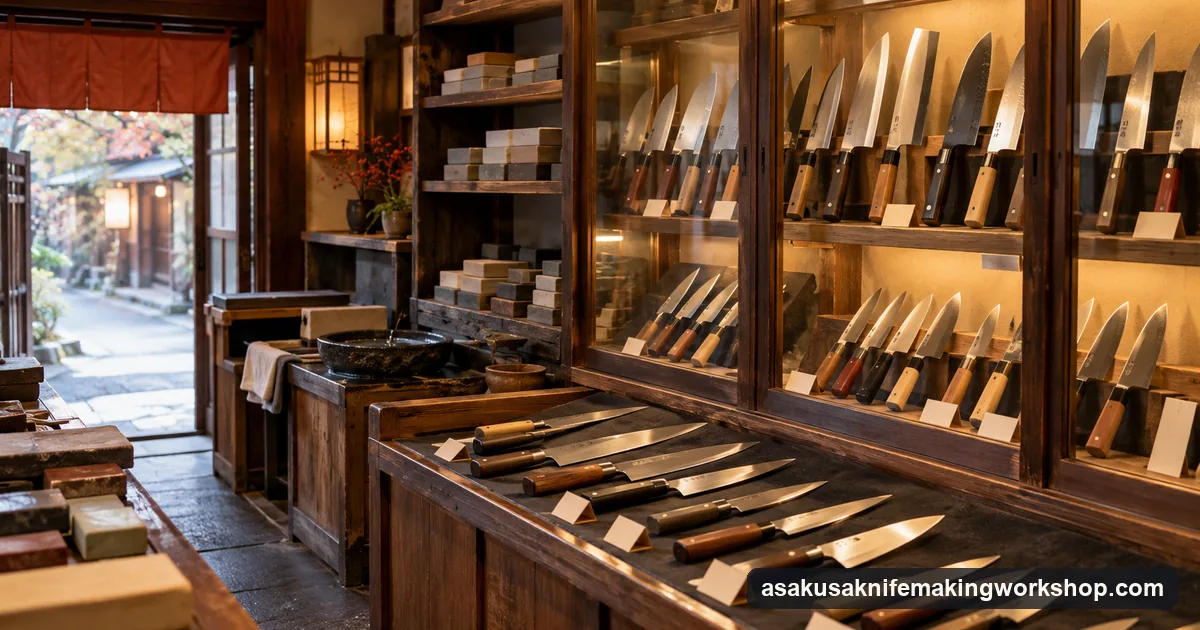
The street
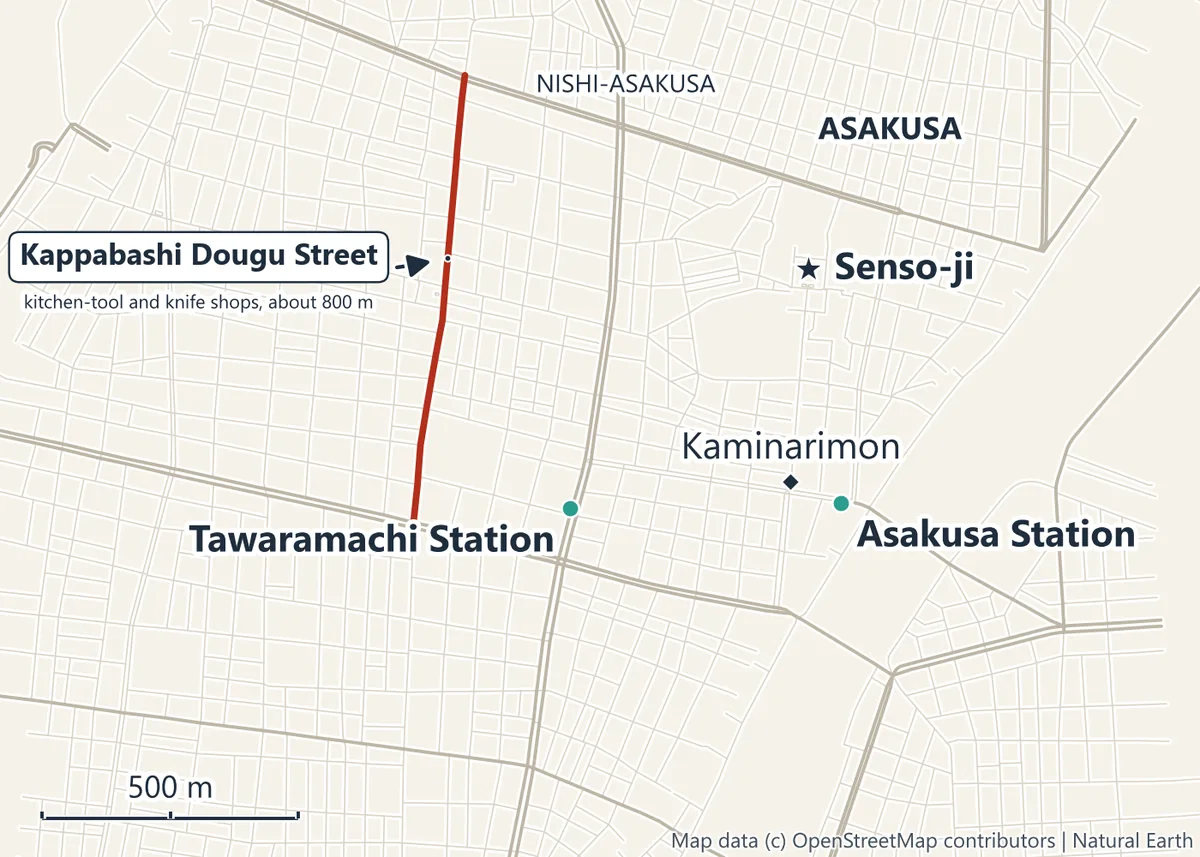
Kappabashi Dougu Street runs about 800 metres between Asakusa and Ueno, with roughly 160 to 170 shops selling everything a restaurant needs: knives, pots, ceramics, lacquer and the plastic food models in restaurant windows. The nearest station is Tawaramachi on the Ginza Line. Japan Guide says it is about a ten-minute walk from Senso-ji.
| What you need to know | Detail |
|---|---|
| Hours | Most shops open at least 10:00 to 17:00 (Japan Guide) |
| Closed | Many shops close on Sundays and public holidays |
| Festival | The Kappabashi Kitchenware Festival ran 6 to 12 October in 2026, with about 130 shops taking part (Japan Travel) |
| Payment | Carry yen: the NipponGo tour tells you to bring cash, and Tokyo Cheapo has had 5 to 10% off for paying cash |
| Tax-free | Not every shop processes it; there is a Smart Refund tax-free counter on the street (Good Luck Trip) |
| Nearest station | Tawaramachi, Ginza Line |
Three knife shops worth knowing
Kama-Asa. Founded in 1908 in Kappabashi by Minosuke Kumazawa, according to the shop’s own history page, and first a shop for kama pots. Its range runs from santoku and gyuto to deba, yanagi and usuba, plus whetstones and a sharpening service. Time Out lists it at 2-24-1 Matsugaya.
Kamata. Founded in 1923, at 2-12-6 Matsugaya, seven minutes’ walk from Tawaramachi Station (LIVE JAPAN). Tokyo Cheapo says the third-generation owner, Seiichi Kamata, is known as a master sharpener, that the shop sharpens each knife before it is sold, and that it will resharpen knives from around ¥1,000.
Tsubaya. A specialist Japanese kitchen-knife shop at 3-7-2 Nishi-Asakusa. The Kappabashi shopping-street association lists it as open 9:00 to 18:00 on weekdays and 10:00 to 17:00 on Saturdays, Sundays and holidays (closed at the year end), so it is one knife shop you can visit on a Sunday.
These three are the ones Tokyo Cheapo names as the big three for knives. There are many more on the street.
What to decide before you walk in
Stainless or carbon steel. Carbon steel takes a keen edge but rusts if it is left wet; stainless resists rust, though it can still rust if left wet for long. If the knife is going into a busy home kitchen, say so.
Single or double bevel. Traditional Japanese knives such as the yanagiba, deba and usuba are often single-bevel: sharpened on one side only, which allows very thin cuts but takes practice. The gyuto (chef’s knife) and santoku (all-purpose) are usually double-bevel, like a Western knife. A single-bevel knife is made for one hand, so left-handed cooks need to ask.
Shape. The santoku is the general-purpose shape; the gyuto is the larger chef’s knife; the nakiri is a vegetable knife; the petty is a small utility knife.
Budget. Tokyo Cheapo gives a range from about ¥5,000 for a small paring knife to ¥500,000. Asakusa knife workshop prices has more on what an everyday knife costs.
Engraving. The Yamaguchi Motors tour listing says most shops will engrave a name in Japanese for a small fee, but that it usually takes a few days. Ask on the first day of your trip, not the last.
Shopping with a guide
You can walk Kappabashi on your own for free. A guided tour earns its price if you want someone to translate at the counter and tell you honestly whether a knife suits you. Four tours on this site do it, and none includes the knife.
Asakusa History Tour and Knife Stores
Senso-ji, Nakamise and Hozomon, then an hour on Kappabashi. Up to 8 people, rain or shine.
Check dates →Asakusa to Kappabashi Knife Tour
A local lunch, then help choosing a knife for how you cook. Bring cash.
See this tour →Kappabashi and Buy a Real Japanese Knife
Hotel pickup by van, the full street, and help packing the knife for checked luggage.
See this tour →Prices, ratings and review counts from our October 2026 data check; operators change prices, so treat them as the shape of the market, not a quote.
Arumachi’s listing promises “candid and neutral feedback” while you hear the shop’s sales pitch, and uses headsets for groups of three or more. NipponGo visits about three or four knife stores chosen for different price ranges, after a lunch that is included; it is not suitable for wheelchair users. Yamaguchi Motors only offers dates when the street is properly open and says some shops close on Sundays. The fourth, JGA’s private tour, pairs Tsukiji with Kappabashi; see that tour.
Before you buy
Bring your physical passport if you want tax-free, as the Japanese Knife Lab guide advises, and read bringing a Japanese knife home before you pack. To fit the street around a workshop and Senso-ji, see the half-day itinerary.
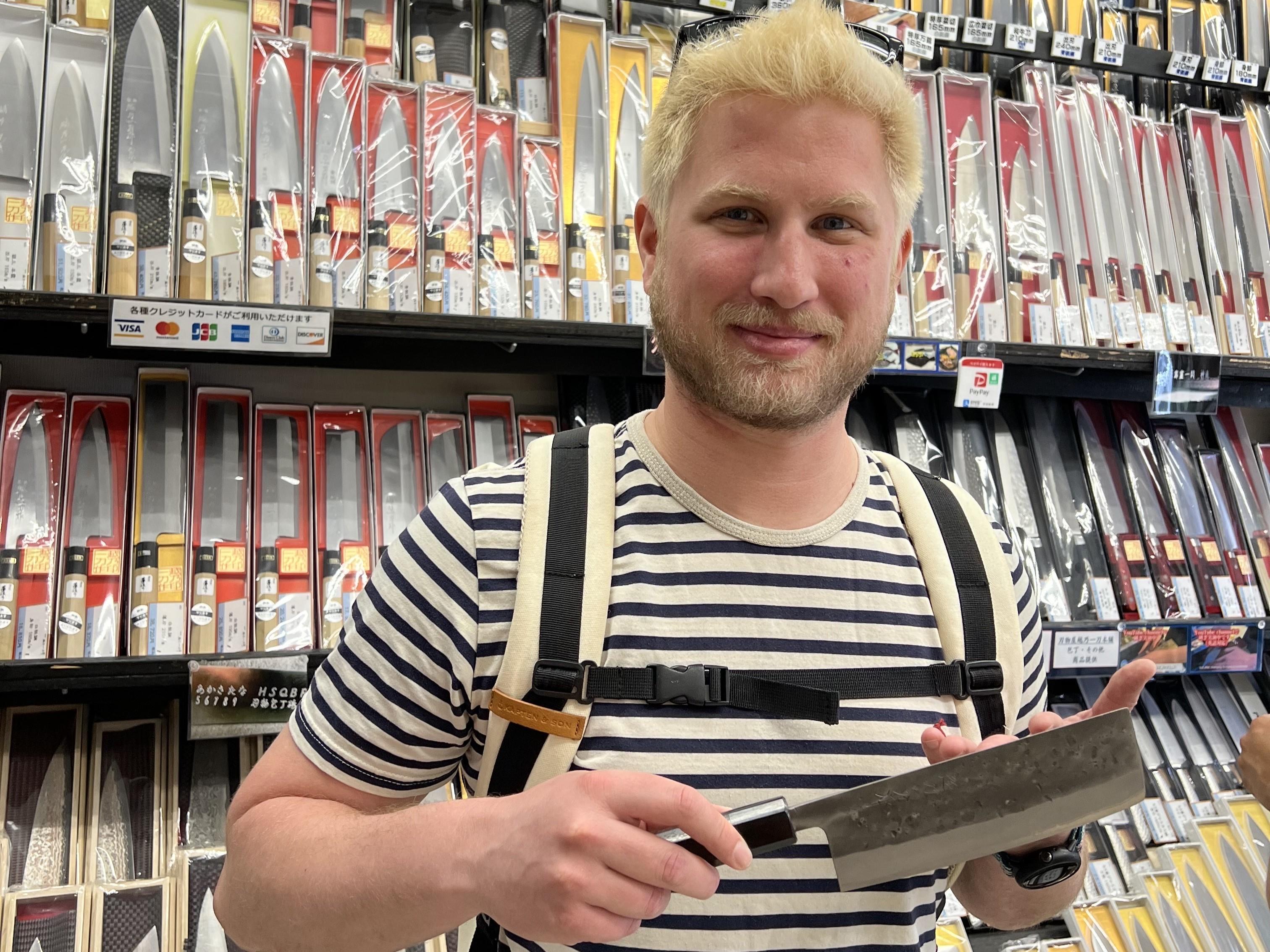
Book the Asakusa History Tour with Knife Store Visits
Arumachi's 3.5-hour walk: Senso-ji, Nakamise and Hozomon with a certified guide, then an hour on Kappabashi at the knife stores, with candid advice while you shop. Rated 5.0 from 6 reviews, from about $76 in October 2026; up to 8 people.
Check Availability & Book