Japanese Knife Sharpening Class in Asakusa: The 2-Hour Class vs the 40-Minute Workshop
Taimatsu's two-hour knife sharpening class near Kappabashi against the 40-minute Asakusa workshop: what each teaches, price, group size, who it suits.
If you want to learn to sharpen a Japanese knife well enough to do it at home, book Taimatsu’s two-hour class; if you want a knife and a taste of the whetstone in a busy day, book the 40-minute Traveling Tokyo workshop. The class is the technical one, at about $177 with a single review so far. The workshop is the proven one, at about $91 with 419 reviews.
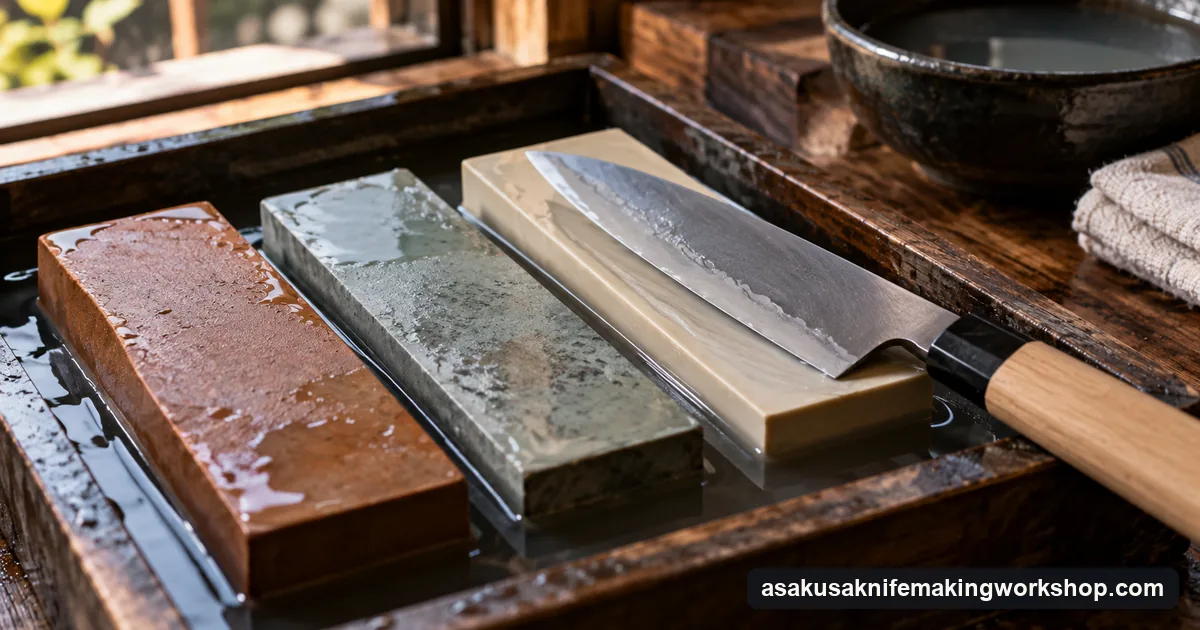
The two side by side
| Taimatsu sharpening class | Traveling Tokyo workshop | |
|---|---|---|
| Length | 2 hours | 40 minutes |
| From (October 2026) | $177 | $91 |
| Rating | 5.0 (1) | 4.9 (419) |
| Where | 1-9-8 Nishiasakusa, Kappabashi side | Asakusa, exact place with the booking |
| Group | Up to 8 | Small and larger groups |
| Teaching | Knife history, steel types, sharpening theory, demonstration, whetstones of different grits | Blade angles, stone technique, basic maintenance |
| You take home | Your freshly sharpened knife | The knife you sharpened and shaped, with its handle |
| Not suitable for | Under 10, wheelchair users, mobility or visual impairment | Nothing listed; wheelchair accessible |
Prices, ratings and review counts from our October 2026 data check; operators change prices, so treat them as the shape of the market, not a quote.
What the two-hour class covers
The class runs in five parts, according to Taimatsu’s listing: a welcome, a tool and safety briefing, a sharpening demonstration by the instructor, hands-on practice sharpening your own knife and testing it, then clean-up and finishing tips. Along the way you cover the history of knives, steel types and the theory behind sharpening, with whetstones of different grits. The Japanese knife, whetstone, sharpening stand, apron and towel are provided, so you arrive with nothing. The group is limited to eight.
The one review so far is from a professional cook from Italy, who wrote that the instructor “was really knowledgeable and was able to answer all my questions with great competence”, that the knife sharpened in class was given to them, and that the instructor then took them to the shop where he works to help them buy professional knives. One review is not a track record, but it is the kind of review a cook should read.
What the 40-minute workshop covers
Traveling Tokyo’s workshop is less a lesson and more a first go. Bilingual instructors take you through blade angles and stone technique step by step, you sharpen and refine the knife yourself, choose a handle and leave with it. Guests write warmly about the instructors and about leaving with a working knife; one said “New passion unlocked!” It costs about half as much, and it is cashless only. The same operator also runs a one-hour session at $88, with four reviews, which sits between the two. Which Asakusa knife workshop to book covers all four.
Who should book which
2-Hour Sharpening Class
Steel, grits, a demonstration and supervised practice. Ages 10 and up.
Check dates →40-Minute Workshop
Sharpen, shape, pick a handle, go. Wheelchair accessible.
See this workshop →1-Hour Knife Craft Workshop
Materials, tools and sharpening in a group of up to 10.
See this workshop →Other ways to learn on Kappabashi
Tokyo Cheapo reports that the Kamata knife shop on Kappabashi runs its own sharpening class, at ¥5,000 with a professional whetstone worth ¥5,400 and a certificate card that gives 10% off in the shop. It also calls the class notoriously difficult to book, with details in Japanese only, and the article was last updated in April 2024, so check before you plan around it. The same article says Kamata will resharpen knives from around ¥1,000.
How often to sharpen, once you are home
Sources disagree, because it depends on how much you cook. The knife maker Hasu-Seizo suggests every four to six months for someone cooking a few times a week, and every two to four months for a daily cook. Seisuke’s guide puts it at two or three times a year, and gives the simple answer: when the knife is dull, which you notice when it wedges in a carrot instead of gliding through. Between sharpenings, dry the blade straight after washing. If your knife is carbon steel, it will rust if left wet, and a light coat of oil helps. The class is where you learn to do this yourself rather than pay a shop. When you buy a second knife, Kappabashi knife shops is the place to start.
Before you book
The class does not run every day, so check the calendar a few days ahead. For carrying the knife back to your hotel and onto the plane, see bringing a Japanese knife home.
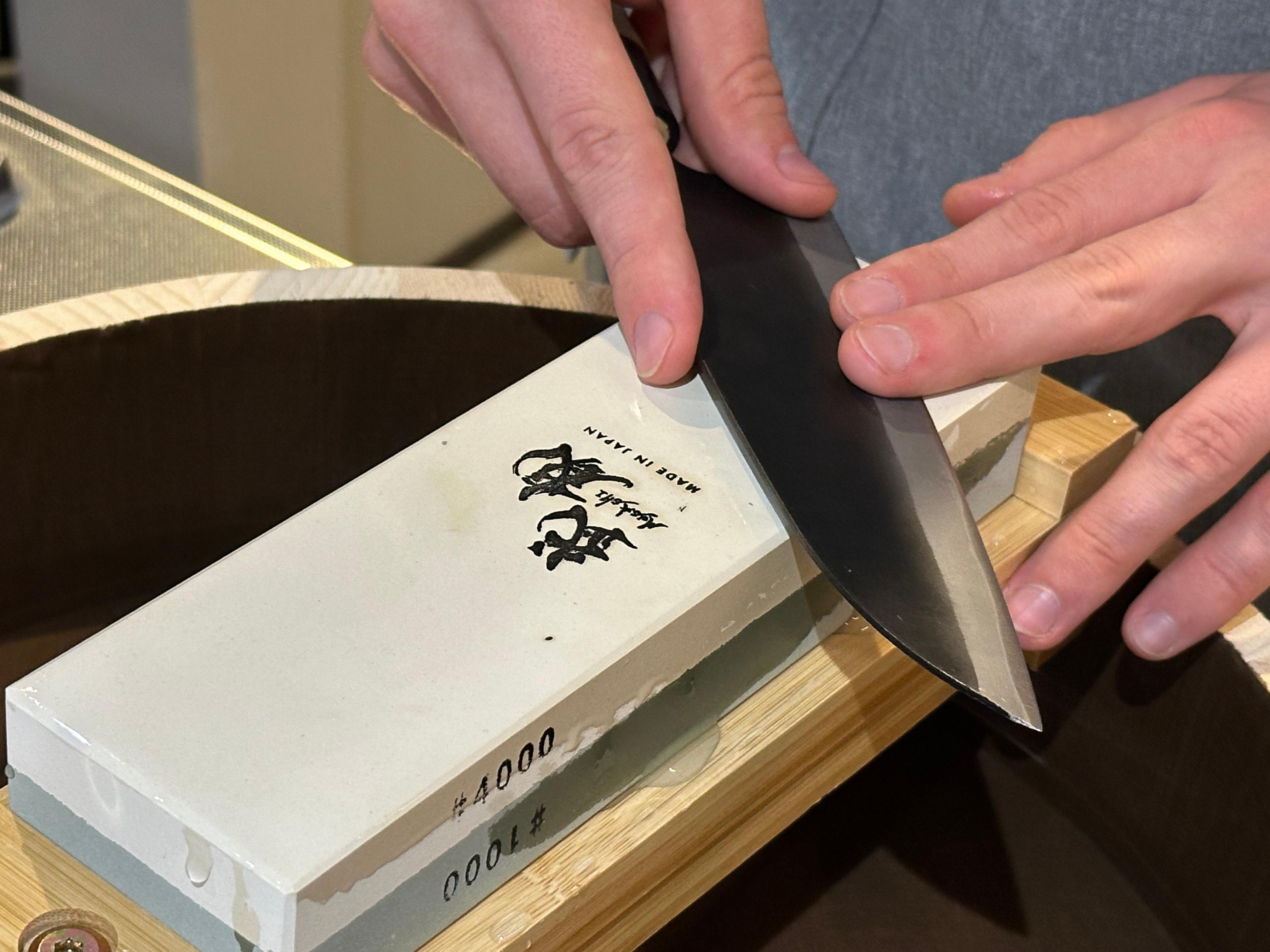
Book the 2-Hour Knife Sharpening Class
Taimatsu's class at 1-9-8 Nishiasakusa: knife history, steel types and whetstones of several grits, then sharpen and test your own knife and take it home. At most 8 people, from about $177 in October 2026; free cancellation up to 24 hours before.
Check Availability & Book