How to Bring a Japanese Knife Home from Tokyo
Getting a knife from an Asakusa workshop or Kappabashi home: Japan's 6 cm rule, wrapping it for trains, checked luggage only, the Nov 2026 tax-free change.
Yes, you can take a knife from an Asakusa workshop or a Kappabashi shop home: keep it boxed and wrapped, go straight to your hotel or the airport with it, and fly it in checked luggage, never in your carry-on. Japan’s rules on carrying blades are strict, but taking home a knife you have just bought is a recognised reason to have one with you.
The rules, stage by stage
| Stage | The rule | What to do |
|---|---|---|
| Walking around | Carrying a blade over 6 cm without a justifiable reason is illegal | Carry it only between the shop or workshop, your hotel and the airport |
| On trains | Unwrapped knives have been banned on Japanese trains since 2019 | Cover the edge and tip, wrap it, keep it inside a bag |
| At the airport | Knives are not allowed in the cabin | Pack it in checked luggage |
| Tax-free purchases (from 1 November 2026) | Customs confirms tax-free goods before you check in | Do the customs step first, then check the bag |
| Arriving home | Your country’s import rules apply | Check them before you buy |
Japan’s 6 cm rule
Blades in Japan are controlled by the Swords and Firearms Control Law. The Okinawa Institute of Science and Technology’s guidance for its staff puts it plainly: it is illegal to carry a blade of any kind longer than 6 cm without justifiable grounds, and the penalty can be up to two years’ imprisonment or a fine of up to ¥300,000. Self-protection does not count. Tokyo Weekender reported a 2009 case in which a 74-year-old American tourist who walked into a Shinjuku police station for directions was found with a pocket knife 1 cm over the limit and detained for nine days.
A kitchen knife from a workshop is far longer than 6 cm. What makes carrying it legal is the reason, and the way you carry it. The Sakai knife maker Ichimonji’s guide to carrying knives lists “taking a knife home after purchasing it” as a legitimate reason, and adds that even then the knife must be in a case or sheath or carefully wrapped. Kireaji’s guide says to keep the knife in the shop packaging with the receipt to hand, go directly, with no detours, and keep it where it cannot be drawn in seconds.
So: do the workshop or the shopping, then take the knife back to your room. Do not bring it to dinner.
On trains
After a fatal stabbing on a shinkansen in June 2018, Japan’s transport ministry announced that passengers on all trains would be barred from carrying unpacked knives, as Japan Today reported from Kyodo; the rule took effect in 2019. Station staff and conductors can remove passengers who break it. A packed knife is fine. The guidance is to cover the tip and edge with cardboard or plastic, wrap the blade, and keep it in a bag for the whole ride. The workshop box does most of that for you.
On the plane
Knives go in checked luggage on every flight, including domestic ones in Japan. ANA’s baggage rules warn that taking a knife on board breaks the Civil Aeronautics Act. If you are flying to the United States, the TSA lists knives as not allowed in carry-on bags and allowed in checked bags, and asks that “any sharp objects in checked bags should be sheathed or securely wrapped to prevent injury to baggage handlers and inspectors.”
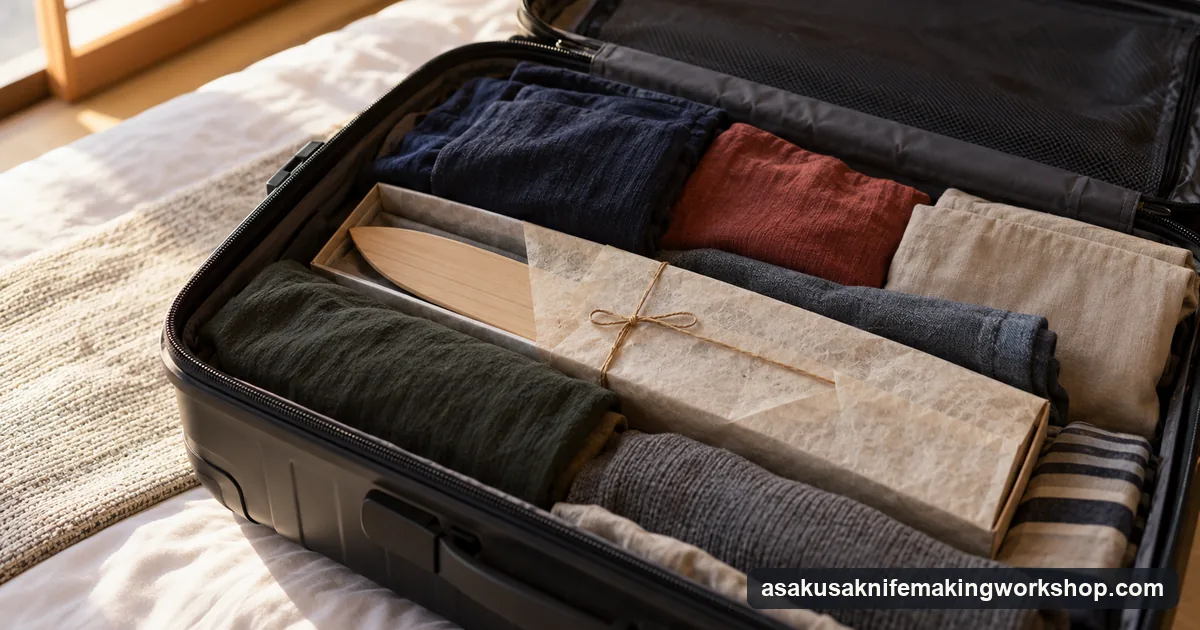
Pack the knife in its box, in the middle of the suitcase, wrapped in clothes. The BAC workshop gives you a knife box and asks you to put it in your check-in luggage. Yamaguchi Motors’ Kappabashi tour includes help packing a knife safely for checked luggage.
Shipping instead
If you are travelling with hand luggage only, shipping is the other route. BAC’s listing says its staff can teach you how to ship the knife. On Kappabashi, the Smart Refund tax-free counter also offers delivery, according to Good Luck Trip’s guide to the street. Two cautions from Ichimonji’s guide to taking knives out of Japan: posting an item makes it lose its tax-free status, and some countries accept knives in checked luggage that they will not accept by post. Ask about cost and your country’s rules before you buy.
The tax-free change on 1 November 2026
From 1 November 2026, Japan’s tax-free shopping becomes a refund. According to Japan Guide, you pay the full price including tax at the shop and get the tax back when you leave Japan. At the airport, you use a customs terminal or Visit Japan Web in the departure lobby before check-in; a green response sends you to check-in, a red one to a customs inspection. If several items are on one receipt, all of them must be with you, or the whole purchase loses its refund. Purchases still need to total at least ¥5,000 before tax at one store on one day.
That order matters for a knife, which cannot go in your carry-on. Do the customs step with the knife still in your suitcase, and check the bag after. A workshop fee is a service, not goods, so the workshops themselves are not part of this.
Arriving home
Every country has its own import rules for blades. The rules above get the knife out of Japan; they say nothing about where you land. Check yours before you buy, especially for long or decorative blades.
Related
For the shops and what to ask, see Kappabashi knife shops. For a workshop that ends with the knife in your hand, see which Asakusa knife workshop to book.
Book the 40-Minute Knife Workshop
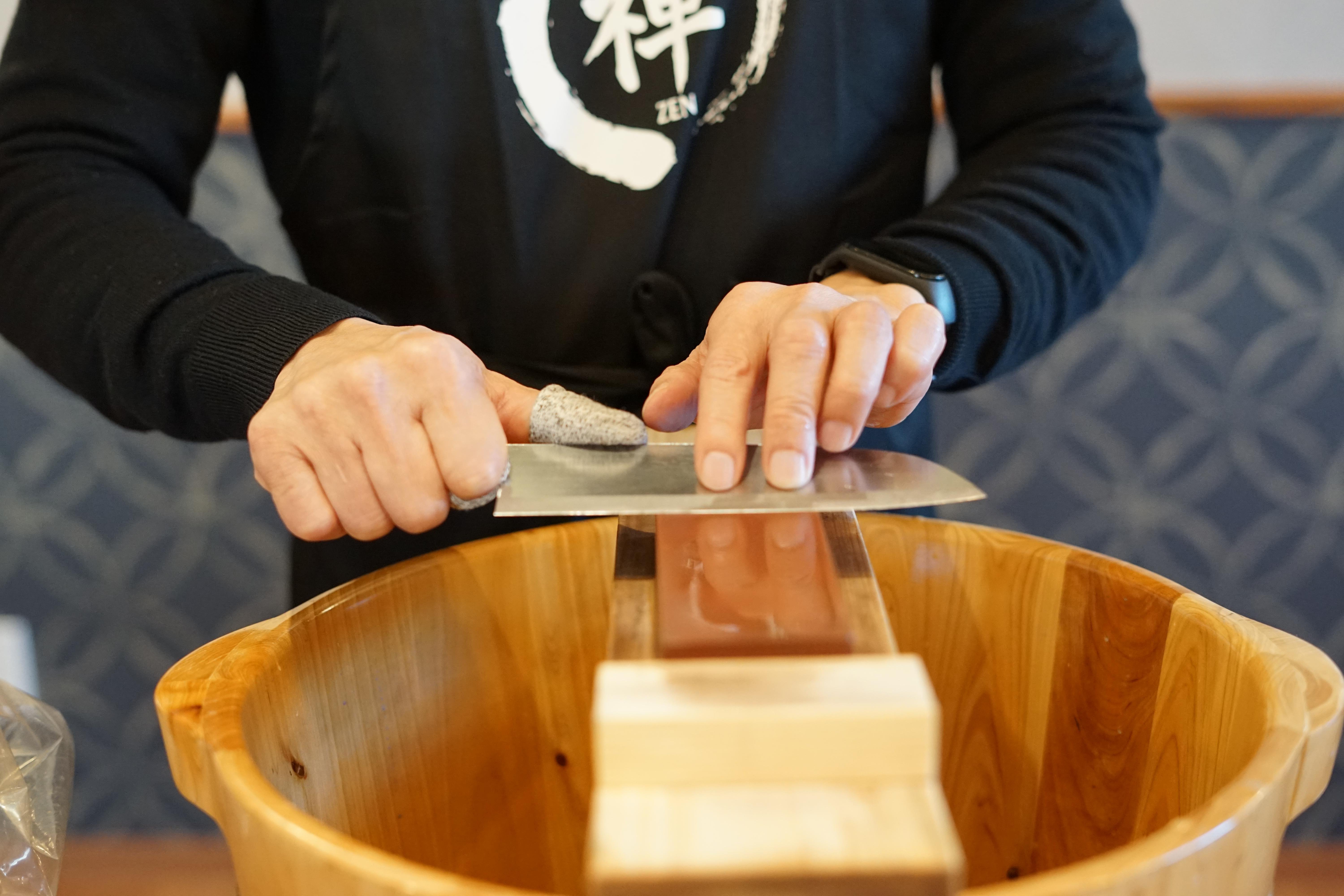
Traveling Tokyo's workshop in Asakusa: sharpen and refine a Japanese knife and take it home with its handle. Rated 4.9 from 419 reviews, from about $91 in October 2026; free cancellation up to 24 hours before.
Check Availability & Book